See MLSOK Data.In the dynamic world of real estate, staying informed about market trends is crucial for both buyers and sellers. Whether you're considering purchasing a new home or selling your

Dated: February 26 2024
Views: 622
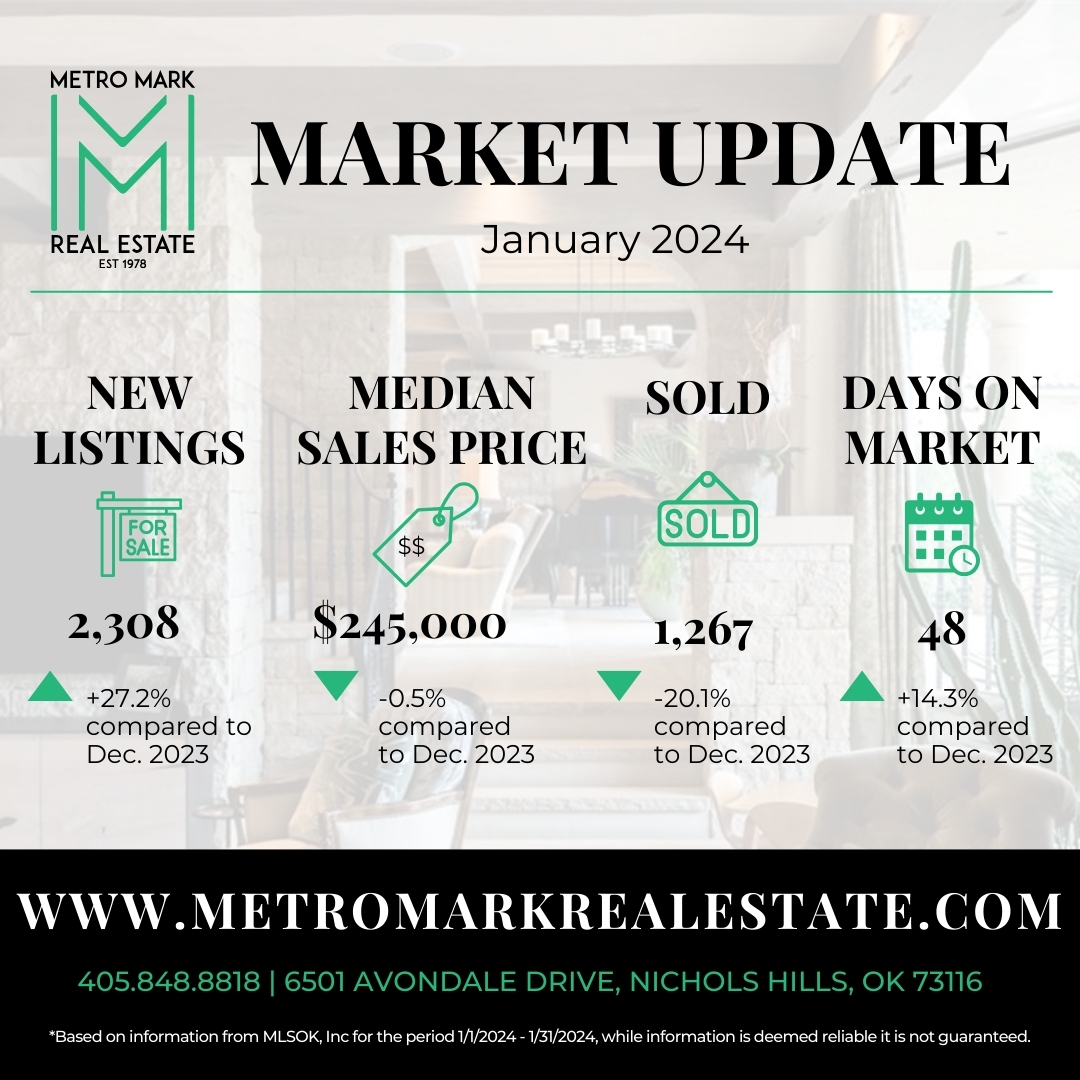
In the dynamic world of real estate, staying informed about market trends is crucial for both buyers and sellers. Whether you're considering purchasing a new home or selling your current property, understanding the latest market statistics can provide valuable insights into pricing, demand, and future trends.
Let's delve into some key real estate market stats to help you navigate this ever-changing landscape:
1. **Home Prices**: One of the most closely watched indicators is home prices. Over the past year, we've witnessed a steady increase in home prices across many markets. Factors such as low inventory, high demand, and historically low interest rates have contributed to this upward trend. However, it's essential to keep an eye on local variations as market conditions can vary significantly from one area to another.
2. **Inventory Levels**: Inventory levels play a significant role in shaping the real estate market. Low inventory levels, as we've seen in recent times, often lead to increased competition among buyers and can drive prices higher. Conversely, a surplus of inventory can result in a more balanced market, giving buyers more options and potentially putting downward pressure on prices.
3. **Days on Market (DOM)**: The average number of days a property spends on the market is another critical metric to monitor. A decrease in DOM typically indicates a strong seller's market, with properties selling quickly due to high demand. On the other hand, an increase in DOM may suggest a cooling market, giving buyers more negotiating power.
4. **Mortgage Rates**: Mortgage rates have a direct impact on the affordability of homes. Historically low mortgage rates have fueled demand by making homeownership more accessible to buyers. However, even minor fluctuations in rates can influence buyer behavior and affect housing affordability.
5. **Sales Volume**: Tracking the number of homes sold in a given period provides valuable insights into market activity and overall demand. Rising sales volume often signals a robust market with healthy buyer activity, while declining sales may indicate a slowdown or shift in market conditions.
6. **Regional Variations**: Real estate markets can vary significantly from region to region, and even within the same city. Factors such as job growth, economic conditions, and local amenities can all influence market dynamics. Therefore, it's essential to analyze market statistics at the local level to gain a comprehensive understanding of specific market conditions.
In conclusion, staying informed about real estate market statistics is essential for making informed decisions in today's competitive market. Whether you're a buyer or seller, understanding key metrics such as home prices, inventory levels, days on market, mortgage rates, sales volume, and regional variations can help you navigate the complexities of the real estate market with confidence. By staying abreast of the latest trends and seeking guidance from experienced professionals, you can position yourself for success in achieving your real estate goals. Navigating the Real Estate Market: Understanding the Latest Stats
In the dynamic world of real estate, staying informed about market trends is crucial for both buyers and sellers. Whether you're considering purchasing a new home or selling your current property, understanding the latest market statistics can provide valuable insights into pricing, demand, and future trends.
Let's delve into some key real estate market stats to help you navigate this ever-changing landscape:
1. **Home Prices**: One of the most closely watched indicators is home prices. Over the past year, we've witnessed a steady increase in home prices across many markets. Factors such as low inventory, high demand, and historically low interest rates have contributed to this upward trend. However, it's essential to keep an eye on local variations as market conditions can vary significantly from one area to another.
2. **Inventory Levels**: Inventory levels play a significant role in shaping the real estate market. Low inventory levels, as we've seen in recent times, often lead to increased competition among buyers and can drive prices higher. Conversely, a surplus of inventory can result in a more balanced market, giving buyers more options and potentially putting downward pressure on prices.
3. **Days on Market (DOM)**: The average number of days a property spends on the market is another critical metric to monitor. A decrease in DOM typically indicates a strong seller's market, with properties selling quickly due to high demand. On the other hand, an increase in DOM may suggest a cooling market, giving buyers more negotiating power.
4. **Mortgage Rates**: Mortgage rates have a direct impact on the affordability of homes. Historically low mortgage rates have fueled demand by making homeownership more accessible to buyers. However, even minor fluctuations in rates can influence buyer behavior and affect housing affordability.
5. **Sales Volume**: Tracking the number of homes sold in a given period provides valuable insights into market activity and overall demand. Rising sales volume often signals a robust market with healthy buyer activity, while declining sales may indicate a slowdown or shift in market conditions.
6. **Regional Variations**: Real estate markets can vary significantly from region to region, and even within the same city. Factors such as job growth, economic conditions, and local amenities can all influence market dynamics. Therefore, it's essential to analyze market statistics at the local level to gain a comprehensive understanding of specific market conditions.
In conclusion, staying informed about real estate market statistics is essential for making informed decisions in today's competitive market. Whether you're a buyer or seller, understanding key metrics such as home prices, inventory levels, days on market, mortgage rates, sales volume, and regional variations can help you navigate the complexities of the real estate market with confidence. By staying abreast of the latest trends and seeking guidance from experienced professionals, you can position yourself for success in achieving your real estate goals.

Amanda Kirkpatrick- Lawler (Broker-Owner) and Julie Keller (Realtor) are Real Estate Professionals in Oklahoma City, Oklahoma, who are passionate about helping people navigate the buying and selling o....
See MLSOK Data.In the dynamic world of real estate, staying informed about market trends is crucial for both buyers and sellers. Whether you're considering purchasing a new home or selling your
 Copyright© 2026 MLSOK, Inc. listing content is believed to be accurate but is not guaranteed. Subject to verification by all parties. The listing information being provided is for consumers personal, non?commercial use and may not be used for any purpose other than to identify prospective properties consumers may be interested in purchasing. This listing data is copyrighted and may not be transmitted, retransmitted, copied, framed, repurposed, or altered in any way for any other site, individual
and/or purpose without the express written permission of MLSOK, Inc. Information last updated on September 14, 2026 4:24 PM UTC
© 2026 OKC Metropolitan Association of REALTORS® (OKMAR). All rights reserved.
Disclaimer: All information deemed reliable but not guaranteed and should be independently verified. All properties are subject to prior sale, change or withdrawal. Neither listing broker(s) nor September 14, 2026 4:24 PM UTC shall be responsible for any typographical errors, misinformation, misprints and shall be held totally harmless.
Data last updated on September 14, 2026 4:24 PM UTC
Show More...
Copyright© 2026 MLSOK, Inc. listing content is believed to be accurate but is not guaranteed. Subject to verification by all parties. The listing information being provided is for consumers personal, non?commercial use and may not be used for any purpose other than to identify prospective properties consumers may be interested in purchasing. This listing data is copyrighted and may not be transmitted, retransmitted, copied, framed, repurposed, or altered in any way for any other site, individual
and/or purpose without the express written permission of MLSOK, Inc. Information last updated on September 14, 2026 4:24 PM UTC
© 2026 OKC Metropolitan Association of REALTORS® (OKMAR). All rights reserved.
Disclaimer: All information deemed reliable but not guaranteed and should be independently verified. All properties are subject to prior sale, change or withdrawal. Neither listing broker(s) nor September 14, 2026 4:24 PM UTC shall be responsible for any typographical errors, misinformation, misprints and shall be held totally harmless.
Data last updated on September 14, 2026 4:24 PM UTC
Show More...
